google-site-verification: googledf360471e5e08135.html

Category: WEalth Management

  • DEAF Fund and Unclaimed Financial Assets in India

    DEAF Fund and Unclaimed Financial Assets in India


    DEAF Fund and Unclaimed Financial Assets in India

    How Depositors, Investors, Nominees, and Legal Heirs Can Recover Forgotten Wealth

    By Ashok Kakkar

    In India, thousands of bank accounts, fixed deposits, insurance policies, mutual fund investments, provident fund balances, shares, and pension amounts remain unclaimed every year. Many families are unaware that money belonging to them may still be lying with banks, insurance companies, mutual funds, or government authorities.

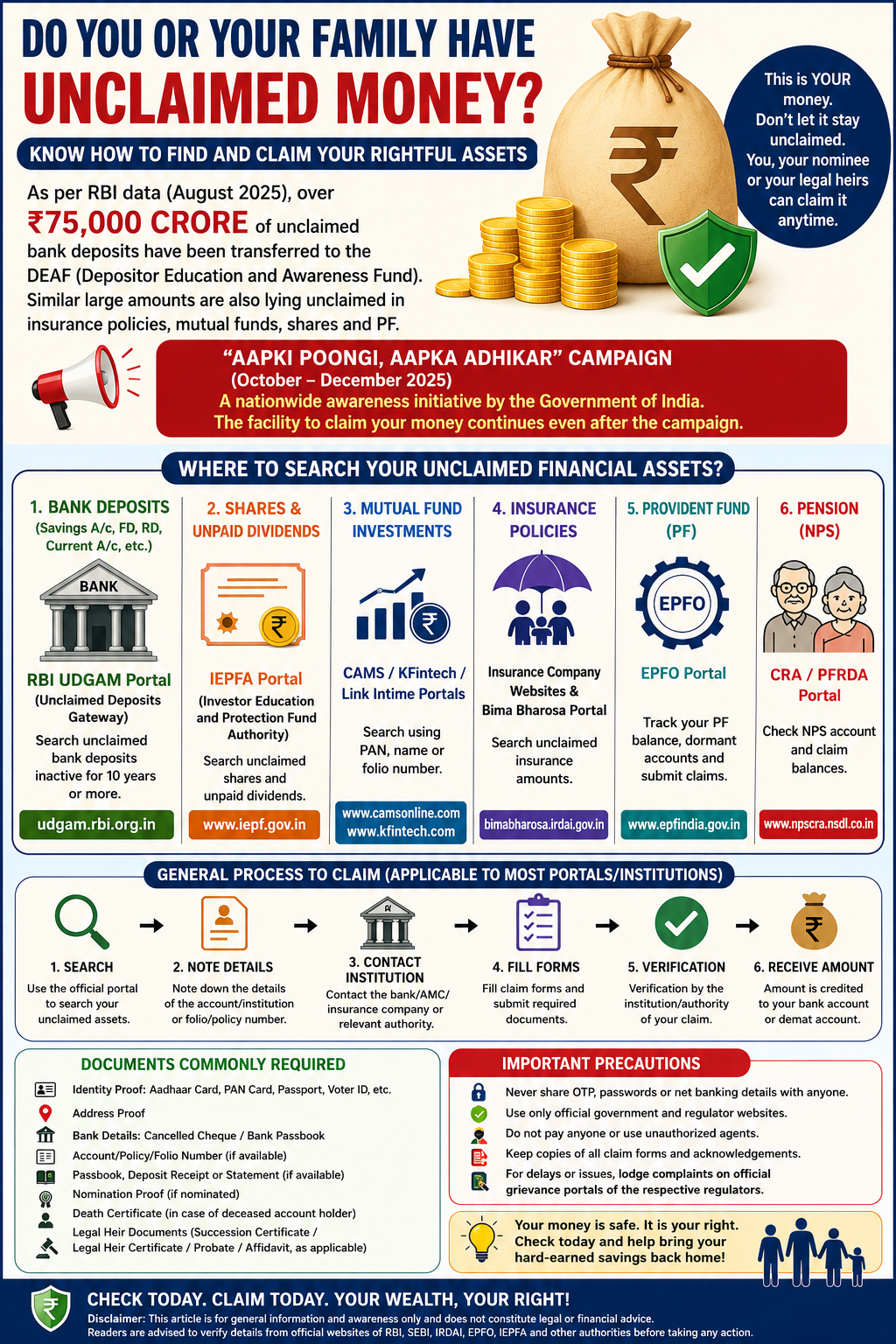
    In recent years, public awareness regarding unclaimed financial assets has increased significantly. Reports indicated that more than ₹75,000 crore worth of unclaimed bank deposits had been transferred to the Depositor Education and Awareness Fund (DEAF) maintained by the Reserve Bank of India. This issue also gained public attention during the “Aapki Poongi, Aapka Adhikar” awareness campaign launched by the Ministry of Finance during 2025. Although the campaign period ended, the facility to trace and recover unclaimed financial assets continues to remain available through official platforms and regulatory systems.

    This article explains the DEAF Fund, the UDGAM portal, and other important platforms through which citizens, nominees, and legal heirs can trace and recover their forgotten financial assets in India.

    1. What is the DEAF Fund?

    DEAF stands for Depositor Education and Awareness Fund. It was established by the Reserve Bank of India under the Banking Regulation framework for handling unclaimed bank deposits.

    When bank accounts or deposits remain inoperative or unclaimed for ten years or more, banks are required to transfer such balances to the DEAF Fund maintained by RBI. These may include:

    1. Savings Bank Accounts
    2. Current Accounts
    3. Fixed Deposits
    4. Recurring Deposits
    5. Demand Drafts
    6. Other eligible unclaimed balances

    However, transfer to the DEAF Fund does not mean the money is forfeited. The depositor, nominee, or legal heir continues to retain full rights over the amount.

    2. Can Depositors Still Claim Money After Transfer to DEAF?

    Yes. Even after transfer to the DEAF Fund:

    • The original depositor can claim the amount.
    • Registered nominees can submit claims.
    • Legal heirs may recover the amount after completing required formalities.

    The concerned bank remains responsible for verifying and settling the claim. After payment to the claimant, the bank obtains reimbursement from the DEAF Fund.

    Thus, the money remains recoverable even after many years.

    3. RBI UDGAM Portal for Unclaimed Bank Deposits

    To simplify the process of locating dormant bank deposits, RBI introduced the UDGAM Portal.

    RBI UDGAM Portal

    The portal allows individuals to search unclaimed deposits across participating banks from a single platform.

    Basic Process

    1. Register using mobile number.
    2. Verify OTP.
    3. Enter name and identification details.
    4. Search for unclaimed deposits.
    5. Identify the concerned bank.
    6. Contact the bank branch and submit claim documents.

    The portal is especially useful for tracing old savings accounts, salary accounts, fixed deposits, or accounts belonging to deceased family members.

    4. Documents Commonly Required for DEAF Claims

    For Original Account Holder

    • PAN Card
    • Aadhaar Card
    • Passbook or deposit receipt
    • Bank account details
    • Cancelled cheque
    • Claim form

    For Nominee

    • Identity proof
    • Nomination proof
    • Death certificate of depositor
    • Bank details

    For Legal Heirs

    • Death certificate
    • Succession certificate where required
    • Legal heir certificate or probate
    • PAN and Aadhaar
    • Affidavits or indemnity documents if prescribed by the bank

    Requirements may vary depending on the bank’s internal policy and amount involved.

    5. Unclaimed Insurance Policies

    Many insurance claims remain unpaid because policyholders fail to update contact details or nominees are unaware of the policy.

    Under regulatory guidelines, insurance companies are required to maintain searchable records of unclaimed policy amounts.

    IRDAI Official Website

    Bima Bharosa Portal

    Most insurers also provide “Unclaimed Amount Search” facilities on their own websites.

    Commonly Required Documents

    • Policy number
    • PAN and Aadhaar
    • Identity proof
    • Bank account details
    • Death certificate where applicable
    • Nominee proof

    6. Unclaimed Shares and Dividends

    Large amounts of dividends and shares remain unclaimed for years because investors forget investments or fail to update records.

    Such amounts are transferred to the Investor Education and Protection Fund (IEPF).

    IEPFA Portal

    Basic Claim Process

    1. Search for unclaimed amounts.
    2. File Forms
    3. Upload required documents.
    4. Submit documents to the company’s Nodal Officer.
    5. Verification and refund process is completed.

    Investors may recover both unpaid dividends and transferred shares through this mechanism.

    7. Unclaimed Mutual Fund Investments

    Many investors forget old mutual fund folios, dividend payouts, or redemption proceeds.

    These may be traced through registrar platforms such as:

    CAMS Online

    KFin Technologies

    Investors can generally search using:

    • PAN number
    • Folio number
    • Name of investor

    After verification, the Asset Management Company may release the unclaimed amount.

    8. Provident Fund and Pension Balances

    Employees frequently change jobs and may forget older PF accounts.

    EPFO Portal

    Using UAN credentials, members can:

    1. View PF balances
    2. Transfer old accounts
    3. Submit withdrawal claims
    4. Trace dormant balances

    Similarly, pension-related claims may be processed through relevant pension authorities or NPS service providers.

    9. Important Precautions While Claiming Unclaimed Assets

    While tracing financial assets, individuals should remain cautious.


    Important Safety Measures

    1. Use only official portals and websites.
    2. Never share OTPs or banking passwords.
    3. Avoid unauthorized agents demanding advance fees.
    4. Maintain copies of claim forms and acknowledgements.
    5. Verify claim procedures directly from official authorities.

    If a bank or institution delays processing, grievance mechanisms of RBI, IRDAI, SEBI, EPFO, or IEPFA may be used.

    10. Importance for Legal Heirs and Families

    In many cases, legal heirs are unaware of financial assets left behind by deceased family members. Lack of nominations, missing records, or outdated addresses often create difficulties.

    Families should therefore:

    • Maintain proper financial records.
    • Register nominees in all accounts and investments.
    • Periodically review dormant investments.
    • Inform family members about major financial assets.

    A simple review of old documents, emails, passbooks, insurance papers, or tax records may help identify forgotten wealth.

    Conclusion

    Unclaimed financial assets are not merely inactive numbers in institutional records; they represent the hard-earned savings of ordinary citizens and families. Whether the amount relates to a dormant bank account, forgotten fixed deposit, unpaid insurance claim, mutual fund investment, provident fund, or old shareholding, rightful owners continue to retain legal rights over such assets.

    The DEAF Fund, RBI UDGAM Portal, IEPFA mechanism, insurance search facilities, mutual fund registrars, and EPFO systems have significantly simplified the process of tracing and recovering unclaimed money.

    A few minutes spent checking these official portals today may help recover valuable financial assets tomorrow.

    Disclaimer

    This article is intended solely for educational and public awareness purposes. Rules, procedures, claim requirements, and regulatory guidelines may change from time to time. Readers are advised to verify the latest information directly from RBI, IRDAI, SEBI, IEPFA, EPFO, banks, insurers, mutual fund registrars, and other competent authorities before taking any action. Professional legal or financial advice should be obtained wherever necessary.

    Ashok Kakkar

    #DEAFFund #UnclaimedDeposits #RBIUDGAM # FinancialAwareness #BankDeposits #IEPFA#EPFO #InsuranceClaims #MutualFunds #LegalHeirs
  • Traditional Litigation Will Always Remain Important — but Young Professionals Should Also Prepare for Emerging Legal Fields

    Traditional Litigation Will Always Remain Important — but Young Professionals Should Also Prepare for Emerging Legal Fields

    Traditional Litigation Will Always Remain Important — but Young Professionals Should Also Prepare for Emerging Legal Fields

    Introduction

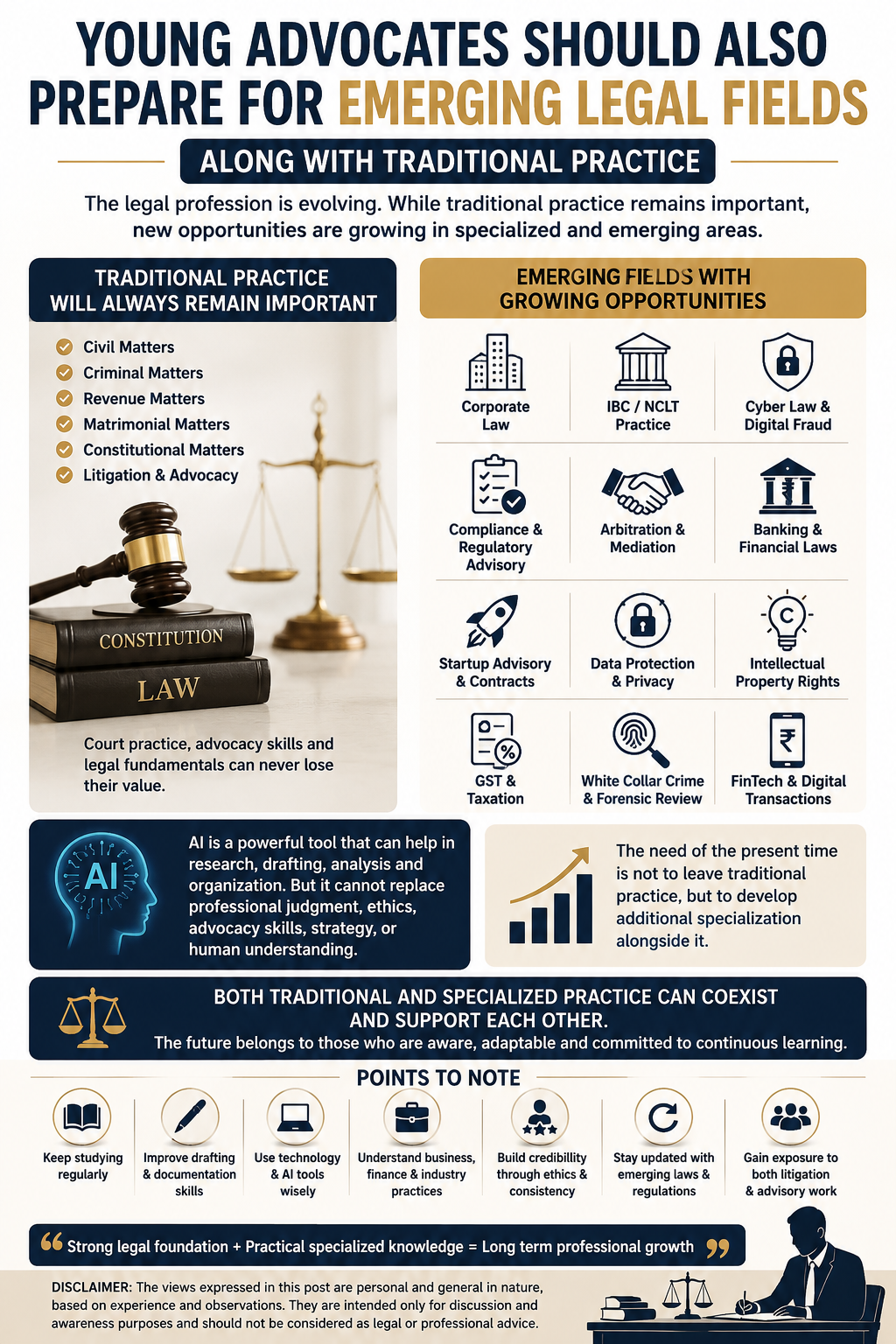
    The legal profession in India is gradually undergoing a major transformation. Traditional litigation practice relating to civil, criminal, revenue, matrimonial, labour, taxation, and constitutional matters continues to remain the backbone of our justice delivery system. Courtroom advocacy, drafting, legal reasoning, and practical litigation experience will always retain their importance and dignity.

    However, alongside traditional practice, rapid developments in business, technology, finance, digital transactions, startups, regulatory systems, and corporate governance have created entirely new opportunities for legal and financial professionals.

    Today, businesses, startups, NBFCs, banks, fintech companies, and technology platforms increasingly require professionals who understand not only legal provisions but also practical commercial realities, compliance structures, financial systems, risk management, and regulatory frameworks.

    As a result, several specialized legal and compliance-related fields are expanding rapidly and creating meaningful professional opportunities for advocates, chartered accountants, company secretaries, insolvency professionals, and young legal practitioners.

    Emerging Areas Creating Professional Opportunities

    In the present environment, the following areas are witnessing substantial growth:

    1. Insolvency & Bankruptcy (IBC/NCLT)

    IBC practice has emerged as one of the fastest-growing professional areas in India. Matters relating to corporate insolvency resolution, liquidation, creditor rights, restructuring, claims verification, and proceedings before NCLT/NCLAT have significantly increased.

    This field requires coordination between advocates, chartered accountants, insolvency professionals, bankers, and corporate advisors.

    2. Corporate Law & Compliance

    With increasing corporate regulation and business expansion, companies now require continuous support in areas such as:

    • Corporate governance
    • Regulatory filings
    • Shareholder agreements
    • Board compliance
    • Corporate restructuring
    • Due diligence
    • Contract management

    Professionals having both legal and financial understanding are increasingly valued.

    3. Banking & Financial Laws

    Banking and finance-related legal work continues to offer long-term opportunities, particularly in:

    • SARFAESI matters
    • DRT proceedings
    • Loan documentation
    • Recovery proceedings
    • Financial frauds
    • Regulatory compliance
    • Negotiable Instruments Act matters

    India’s expanding financial ecosystem continues to generate substantial professional work in these sectors.

    4. Cyber Law & Digital Fraud Matters

    The rapid increase in digital banking, online transactions, fintech platforms, and social media usage has also increased cyber-related disputes and digital fraud cases.

    Legal and financial professionals are increasingly required for:

    • Cyber fraud advisory
    • Digital evidence handling
    • Data protection compliance
    • Online financial fraud disputes
    • IT Act matters
    • Digital transaction-related litigation

    5. Arbitration & Commercial Dispute Resolution

    Commercial entities now increasingly prefer arbitration and mediation for quicker dispute resolution instead of prolonged litigation.

    This has created opportunities in:

    • Domestic arbitration
    • Commercial mediation
    • Infrastructure disputes
    • Contractual disputes
    • Corporate settlements

    6. Startup Advisory & Documentation

    India’s startup ecosystem is expanding rapidly. Startups require support in:

    • Founder agreements
    • Investment documentation
    • ESOP structuring
    • Commercial contracts
    • Regulatory compliance
    • Data privacy frameworks

    Young professionals with strong drafting and documentation skills can build specialized expertise in this area.

    Role of AI & Technology in Professional Practice

    We are now living in an AI-driven and technology-oriented environment. Artificial Intelligence tools are gradually becoming part of professional practice across sectors including law, finance, compliance, and taxation.

    AI can certainly assist in:

    • Legal research
    • Drafting
    • Data organization
    • Compliance review
    • Document analysis
    • Preliminary due diligence

    However, AI cannot replace:

    • Professional judgment
    • Ethics
    • Strategic thinking
    • Practical experience
    • Human understanding
    • Advocacy skills
    • Negotiation ability

    Technology should therefore be treated as a supporting professional tool and not as a substitute for genuine competence and continuous learning.

    Importance of Continuous Learning

    One of the most important realities of the present professional environment is that continuous learning has become essential.

    Professionals today may benefit by:

    • Regular reading and updating
    • Understanding emerging regulations
    • Learning practical drafting
    • Developing technology awareness
    • Understanding financial and commercial systems
    • Building interdisciplinary knowledge

    The future may increasingly favour professionals who combine:

    • legal understanding,
    • financial awareness,
    • commercial practicality,
    • and technological adaptability.

    Traditional Practice Will Continue to Remain Important

    While discussing emerging opportunities, it is equally important to understand that traditional litigation practice will never lose its significance.

    Civil courts, criminal courts, revenue authorities, taxation forums, tribunals, and constitutional courts will continue to remain central to the legal system.

    The need of the present time may therefore not be to abandon traditional practice, but to strengthen oneself with additional specialization and practical knowledge alongside it.

    Both traditional litigation and specialized advisory practice can coexist and complement each other effectively.

    Conclusion

    The professional environment in India is changing steadily due to technological advancement, digital transactions, regulatory expansion, and evolving business systems.

    Young advocates and professionals who remain proactive, disciplined, and continuously updated may find significant opportunities in emerging fields such as:

    • IBC/NCLT
    • Corporate Law
    • Banking & Financial Laws
    • Cyber Law
    • Compliance
    • Arbitration
    • Startup Advisory
    • Data Protection
    • Digital Fraud Matters

    At the same time, traditional litigation skills, ethics, drafting ability, and practical understanding will continue to remain foundational to the legal profession.

    The future may belong to professionals who successfully combine strong fundamentals with continuous learning, practical exposure, and adaptability.

    Disclaimer

    The views expressed in this article are personal, general, and experience-based reflections shared purely for educational and awareness purposes. The article does not constitute legal, financial, career, or professional advice. Readers are advised to exercise their own independent judgment and professional discretion.

    Ashok Kakkar
    Advocate | Insolvency Professional | Former Banker
    Chandigarh

    Ashok Kakkar is an Advocate, Insolvency Professional, and Former Banker with over 40 years of combined experience in banking, finance, recovery, insolvency, and legal practice. He regularly writes and shares practical insights on emerging legal fields, banking laws, IBC/NCLT practice, and professional development for young advocates and professionals.

    #Corporate Law, #IBC, NCLT, #Cyber Law, #Banking Laws, #Arbitration, #Compliance, #Young Advocates, #Legal Profession, #AI, #Professional Development

  • Strategic Recovery Pathways: How Banks Evaluate SARFAESI vs IBC in Stressed Asset Cases

    Strategic Recovery Pathways: How Banks Evaluate SARFAESI vs IBC in Stressed Asset Cases

    Strategic Recovery Pathways: How Banks Evaluate SARFAESI vs IBC in Stressed Asset Cases

    Understanding the Practical Decision-Making Process in Modern Recovery and Insolvency Matters

    Background

    In today’s evolving banking and insolvency environment, recovery of stressed assets has become one of the most complex and commercially sensitive areas for banks, financial institutions, insolvency professionals, chartered accountants, advocates, and other stakeholders.

    Whenever a borrower account turns into a Non-Performing Asset (NPA), lenders are often faced with an important practical question:

    Should recovery action be initiated under the SARFAESI Act, or should proceedings under the Insolvency and Bankruptcy Code (IBC) be considered?

    In practical situations, this decision is rarely based only on legal provisions or availability of collateral security. Instead, it usually involves a broader evaluation of financial exposure, operational viability, statutory compliance, governance issues, litigation risks, promoter conduct, stakeholder interests, and long-term recovery prospects.

    From a professional banking perspective, the objective is not merely enforcement of security but maximization of recovery while balancing timelines, economic feasibility, continuity of operations, and overall stakeholder value.

    This article attempts to discuss some of the key practical factors that are commonly evaluated by lenders while determining the appropriate recovery strategy.

    1. Understanding the Difference Between SARFAESI and IBC

    Before examining the practical considerations, it is important to understand the broad distinction between the two frameworks.

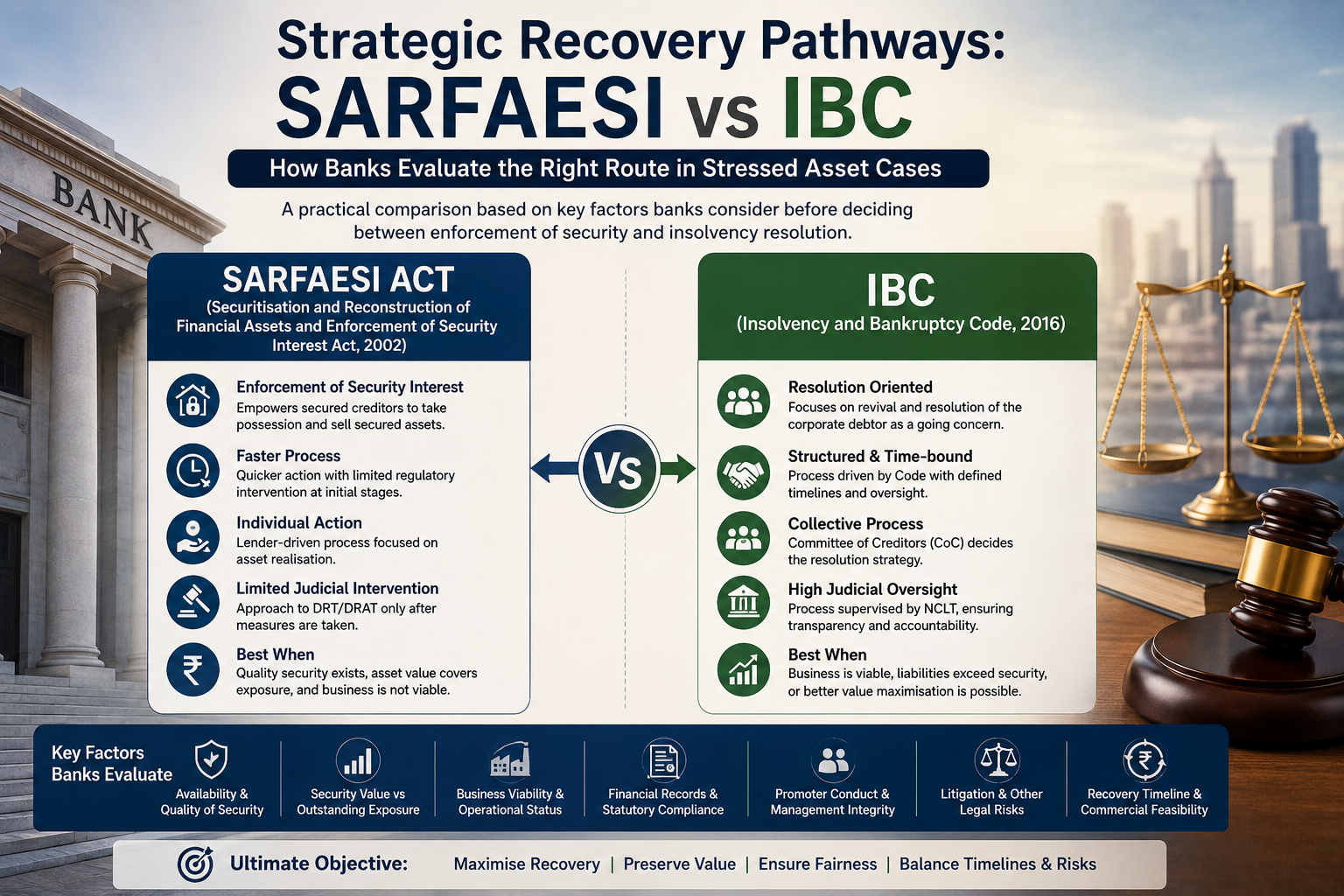
    The SARFAESI Act primarily enables secured creditors to enforce their security interest and recover dues through possession and sale of secured assets without requiring direct court intervention at the initial stages.

    The Insolvency and Bankruptcy Code (IBC), on the other hand, provides a structured insolvency resolution mechanism focused on revival and resolution of the corporate debtor through a collective process supervised by the Adjudicating Authority.

    While SARFAESI is generally associated with enforcement of security, IBC is more focused on resolution, restructuring, and preservation of enterprise value wherever feasible.

    Accordingly, lenders usually evaluate multiple practical aspects before deciding the appropriate route.

    2. Availability and Quality of Secured Assets

    One of the primary considerations for banks is the quality and enforceability of the available security.

    Lenders generally assess:

    1. Whether adequate mortgage or security is available.
    2. Marketability and realizable value of assets.
    3. Physical condition and location of the secured property.
    4. Ease of taking possession and conducting sale.
    5. Existence of title disputes or property-related litigation.

    Where secured assets are commercially valuable, identifiable, and capable of relatively faster realization, lenders may consider SARFAESI proceedings as a practical recovery mechanism.

    However, availability of security alone may not always ensure effective recovery if enforcement becomes commercially difficult or legally complicated.

    3. Security Value Versus Outstanding Exposure

    Another important consideration is whether the realizable security value is sufficient to substantially cover the total outstanding dues.

    Banks usually evaluate:

    1. Probability of recovery shortfall after sale.
    2. Risk of distress value erosion.
    3. Future depreciation in value of assets.
    4. Additional unsecured exposure and contingent liabilities.

    In many stressed accounts, total liabilities significantly exceed the realizable value of secured assets. In such situations, isolated sale of properties may not generate meaningful recovery.

    Further, piecemeal sale of assets may adversely affect the future viability of the remaining business operations. Consequently, lenders may examine whether collective resolution under IBC could potentially provide better value maximization.

    4. Operational Status and Viability of Business

    From a strategic perspective, lenders also evaluate whether the borrower’s business is still operational and commercially viable.

    Important practical considerations include:

    1. Continuity of operations.
    2. Existing cash flow generation.
    3. Market sustainability of the business.
    4. Availability of operational records and management information.
    5. Potential for revival as a going concern.

    Where business continuity and revival appear commercially feasible, lenders may consider IBC proceedings more strategically instead of relying solely on distress sale of individual assets.

    Continuation of operations under a regulated framework may sometimes preserve significantly higher enterprise value.

    5. Financial Records and Statutory Compliance Position

    In practical recovery matters, one of the biggest challenges faced by banks is poor financial discipline and non-compliance by stressed borrowers.

    Lenders commonly examine:

    1. Availability and reliability of financial statements.
    2. GST compliance status and return filings.
    3. Income Tax liabilities and pending proceedings.
    4. ROC filings and corporate compliance status.
    5. Pending statutory dues and notices.
    6. Audit irregularities and compliance gaps.

    In several stressed accounts, records may be incomplete, unreliable, or outdated, making independent decision-making difficult for banks and lenders.

    In such situations, lenders may sometimes prefer the structured mechanism available under IBC because the Resolution Professional (RP) is legally obligated to function in accordance with law and under the supervision of the Committee of Creditors (CoC) and Adjudicating Authority.

    This framework often provides financial creditors with better visibility and collective oversight of the insolvency process.

    6. Promoter Cooperation and Governance Concerns

    Promoter conduct and management cooperation materially influence recovery strategy.

    Banks usually evaluate:

    1. Cooperation from promoters and directors.
    2. Availability of books, records, and asset-related details.
    3. Governance standards and transparency.
    4. Concerns relating to diversion or siphoning of funds.
    5. Willingness to support restructuring or settlement.

    Where governance issues become serious or promoter cooperation remains weak, lenders may consider independent monitoring under IBC to be commercially more suitable.

    7. Employee, Labour, and Litigation-Related Exposure

    In many stressed accounts, recovery proceedings are further complicated by multiple litigations and stakeholder claims.

    These may include:

    1. Employee and labour dues.
    2. Operational creditor claims.
    3. Tax disputes and statutory proceedings.
    4. Civil and regulatory litigation.
    5. Proceedings affecting assets or business operations.

    Standalone enforcement under SARFAESI in such situations may sometimes create fragmented legal complications and procedural delays.

    One of the important features under IBC is the moratorium mechanism, which restricts certain recovery actions and legal proceedings against the corporate debtor during the insolvency process.

    This protection may help maintain continuity of operations despite litigation pressure and enable the business to function under a regulated framework.

    8. Why IBC May Sometimes Be Strategically Preferred

    In complex stressed accounts involving multiple stakeholders, statutory non-compliances, operational issues, or litigation exposure, lenders may sometimes strategically evaluate the IBC route.

    Some commonly observed reasons include:

    1. Management shifts to an independent Resolution Professional.
    2. RP functions under provisions of law and directions of the CoC.
    3. Proceedings remain under supervision of the Adjudicating Authority.
    4. Moratorium protection may support continuity of operations.
    5. Financial creditors obtain a collective and structured view of the corporate debtor.

    In certain cases, lenders may consider that continuation of the business as a going concern under regulated supervision could potentially result in better long-term recovery than immediate distress sale of individual secured assets.

    9. Resolution Possibility and Economic Considerations

    Another important commercial consideration is whether the stressed entity can attract successful resolution applicants or new investors.

    Banks may evaluate:

    1. Possibility of fresh fund infusion.
    2. Scope for takeover by new management.
    3. Preservation of employment and operations.
    4. Continuation of economic activity.
    5. Long-term stakeholder value creation.

    Where viable resolution becomes possible, the business may continue under better management with improved operational efficiency.

    Such outcomes may benefit:

    • Financial creditors
    • Operational creditors
    • Employees
    • Statutory authorities
    • Suppliers and vendors
    • Overall economic activity

    Accordingly, preservation of a viable enterprise under IBC may sometimes serve broader commercial and economic interests beyond immediate recovery.

    10. Time, Cost, and Recovery Efficiency

    Finally, lenders generally conduct a practical cost-benefit analysis before deciding the recovery route.

    Key considerations include:

    1. Estimated timelines.
    2. Litigation risks and procedural delays.
    3. Cost of proceedings.
    4. Probability of effective realization.
    5. Commercial feasibility of enforcement.

    Ultimately, recovery strategy is often influenced more by practical recoverability and value maximization rather than theoretical security coverage alone.

    Conclusion

    In practical banking and insolvency matters, the choice between SARFAESI and IBC is not merely a legal decision but a strategic commercial assessment based on the facts and circumstances of each case.

    Banks, financial institutions, insolvency professionals, chartered accountants, legal advisors, and other stakeholders generally evaluate asset quality, operational viability, statutory compliance, governance concerns, litigation exposure, stakeholder interests, and long-term recovery prospects before selecting the appropriate framework.

    In some situations, enforcement under SARFAESI may appear commercially appropriate. In other cases — particularly where operational continuity, compliance supervision, enterprise revival, and stakeholder protection become important — proceedings under IBC may potentially provide better value realization.

    The evolving recovery and insolvency ecosystem continues to shape how lenders balance enforcement, resolution, and economic sustainability in stressed asset matters.

    Professionals may also share additional practical factors which, in their experience, significantly influence such strategic decision-making processes.

    Disclaimer

    This article is intended solely for academic discussion, professional knowledge-sharing, and general awareness purposes. It does not constitute legal advice, financial recommendation, recovery opinion, insolvency opinion, or strategic guidance for any specific account or proceeding. Decisions relating to SARFAESI actions, insolvency proceedings, restructuring, or recovery mechanisms should always be taken after considering the specific facts, applicable laws, regulatory framework, judicial developments, and professional advice relevant to each individual case.

    Ashok Kakkar

    Advocate & Insolvency Professional, Former Banker

    Ashok Kakkar is an independent writer, banking professional, and financial awareness enthusiast with extensive experience in banking operations, recovery matters, and legal-practical issues relating to finance and insolvency. He regularly shares simplified and experience-based insights on banking systems, credit discipline, recovery mechanisms, financial literacy, and legal awareness with the objective of making complex subjects understandable for professionals, borrowers, students, and the general public.

     Tags:
    #IBC, #SARFAESI, #Banking, #Recovery, #Insolvency, #NPA, #Finance, #CIRP, #ResolutionProfessional ,#CreditRisk, #Bankers,#

  • Secure Your Assets: A Practical Guide to Protecting Property and Financial Stability

    Secure Your Assets: A Practical Guide to Protecting Property and Financial Stability

    Secure Your Assets: A Practical Guide to Protecting Property and Financial Stability

    Building Wealth is Important—Protecting It is Essential

    By Ashok Kakkar


    1. Introduction

    For most individuals, property is not merely a financial asset—it is the result of years of dedication, discipline, and thoughtful decision-making. Whether it is a family home, savings, or investments, these assets represent security, stability, and future assurance.

    However, while considerable effort goes into creating wealth, the equally important aspect of protecting that wealth is often overlooked.

    In practical experience, financial loss rarely occurs due to sudden or unpredictable events. More often, it is the result of small but significant lapses—delayed planning, lack of documentation, unstructured borrowing, or decisions taken under emotional influence. Over time, these seemingly minor issues accumulate and gradually weaken control over assets.

    This article aims to present a clear and practical understanding of these risks and provide actionable insights to ensure long-term financial security.

    2. Why Property Protection Matters

    Financial security is not a one-time achievement; it is a continuous process that requires awareness and discipline.

    In many cases, the risks to property arise not from external factors but from internal gaps, such as:

    2.1 Lack of estate planning
    When there is no structured plan for asset distribution, uncertainty and disputes can arise at a later stage.

    2.2 Weak financial discipline
    Irregular savings and uncontrolled expenses gradually reduce financial strength.

    2.3 Absence of proper documentation
    Incomplete or poorly maintained records create complications when verification or transfer is required.

    2.4 Inadequate insurance coverage
    Unexpected events can create sudden financial pressure in the absence of protection.

    2.5 Overdependence on others
    Relying entirely on family or external support can reduce financial independence.

    2.6 Limited financial awareness
    Lack of understanding of financial and legal matters often leads to uninformed decisions.

    These risks may remain unnoticed for years, but when triggered by life events such as illness, disputes, or financial stress, they can lead to significant consequences.

    3. Common Mistakes That Put Property at Risk

    Understanding common mistakes is the first step toward prevention.

    3.1 Delay in Estate Planning

    One of the most frequently observed gaps is the delay in preparing a Will. Many individuals assume that there is sufficient time or that family members will manage matters smoothly.

    In reality, absence of a Will can lead to legal complications, delays in property transfer, and disputes among family members. Assets may be distributed according to legal provisions rather than personal intentions.

    Timely estate planning ensures clarity, reduces uncertainty, and provides a structured transition of assets.

    3.2 Living Beyond Financial Capacity

    As income increases, lifestyle expectations also tend to rise. While improvement in lifestyle is natural, it becomes problematic when expenses consistently exceed income.

    This pattern gradually reduces savings, increases dependence on borrowing, and weakens financial resilience. Over time, even a minor financial disruption can create significant stress.

    Financial stability depends not only on how much one earns, but on how effectively one manages and retains those earnings.

    3.3 Excessive Borrowing Without Planning

    Borrowing is a useful financial tool when used wisely. However, unplanned or excessive borrowing can create long-term financial strain.

    When repayment obligations become too high, they restrict financial flexibility and may lead to distress situations. In extreme cases, individuals may be forced to liquidate assets or face legal recovery actions.

    A disciplined approach to borrowing—aligned with repayment capacity—is essential for maintaining financial balance.

    3.4 Ignoring Insurance Protection

    Insurance is often perceived as an optional expense, but in reality, it is a critical safeguard.

    Medical emergencies or unforeseen events can arise without warning. Without adequate insurance coverage, individuals may have to rely on savings or sell assets to meet expenses.

    Insurance provides a protective cushion that helps preserve financial stability during difficult times.

    3.5 Lack of Diversification

    Many individuals prefer investing in familiar avenues such as real estate or fixed deposits. While these may offer stability, over-reliance on a single asset class increases risk exposure.

    Market conditions, policy changes, or economic shifts can affect specific sectors. A diversified portfolio spreads risk and ensures better stability across different situations.

    3.6 Lack of Financial Clarity Within the Family

    In many households, financial matters are not openly discussed. While privacy is understandable, complete lack of awareness among family members can create serious challenges.

    In the event of illness or unexpected situations, family members may struggle to access information related to assets, liabilities, or important documents.

    Maintaining a basic level of financial clarity ensures preparedness and avoids unnecessary confusion.

    4. Practical Steps to Safeguard Your Property

    Protecting property does not require complex strategies. It requires consistent and thoughtful actions.

    4.1 Maintain Proper Documentation

    Proper documentation is the foundation of financial security. All important records—including property papers, insurance policies, and financial statements—should be organized and updated regularly.

    Maintaining both physical and digital copies ensures that information is accessible when required. This simple step can prevent significant delays and complications.

    4.2 Retain Control Over Your Assets

    Transferring property without safeguards can lead to unintended consequences. Decisions made out of trust or emotional considerations should always be supported by proper legal structuring.

    Retaining control, rights, or income sources ensures continued financial independence and security.

    4.3 Ensure Financial Independence

    Financial independence is essential at every stage of life, particularly in later years. Maintaining sufficient funds for personal needs reduces reliance on others and provides a sense of security and dignity.

    A well-planned financial reserve acts as a safety net during uncertain times.

    4.4 Be Prepared for Emergencies

    Unexpected situations can arise at any time. Having immediate access to funds and essential information makes it easier to handle such situations effectively.

    Preparedness reduces stress and ensures that decisions can be taken calmly and efficiently.

    4.5 Review Financial Position Regularly

    Financial planning is not static. Changes in income, family structure, or economic conditions require periodic review.

    Regular assessment of investments, liabilities, insurance, and nominations ensures that financial arrangements remain relevant and effective.

    4.6 Stay Informed and Aware

    Basic financial and legal awareness is a powerful tool. Understanding the implications of documents and decisions helps in avoiding long-term complications.

    Whenever required, professional advice should be sought to ensure clarity and correctness.

    4.7 Balance Trust with Prudence

    Trust is an important aspect of relationships, but financial decisions should not rely solely on trust.

    Proper documentation and legal safeguards provide clarity and protect all parties involved. A balanced approach ensures both emotional comfort and financial security.

    4.8 Plan for Future Needs

    As life progresses, financial requirements evolve. Planning for retirement, healthcare, and long-term needs is essential.

    Early preparation ensures that individuals can maintain independence and avoid financial stress in later years.

    5. A Practical Perspective

    Protecting property is not about adopting complex systems—it is about maintaining consistency in simple practices.

    Regular review, proper documentation, informed decision-making, and disciplined financial behavior collectively create a strong foundation for long-term security.

    Neglecting these aspects, on the other hand, can gradually expose even well-built assets to risk.

    6. Conclusion

    Financial security is not achieved by earning alone. It is sustained through awareness, planning, and disciplined execution.

    The true value of wealth lies in its ability to provide stability, independence, and peace of mind—not just today, but in the future as well.

    By taking timely and thoughtful actions, individuals can ensure that their assets remain protected and continue to serve their intended purpose.

    7. Disclaimer

    This article is intended for general awareness and informational purposes only. It does not constitute legal, financial, or professional advice.

    Readers are advised to seek guidance from qualified professionals based on their individual circumstances before making any financial or legal decisions.

    8. About the Author

    Ashok Kakkar
    Advocate | Insolvency Professional | Former Banker

    With over four decades of experience in banking and legal practice, the author focuses on simplifying complex financial and legal concepts and promoting awareness for better decision-making.

    #Property Protection  #Financial Security #Asset Protection #Estate Planning #Wealth Management #Financial Planning India #Legal Awareness #Personal Finance