
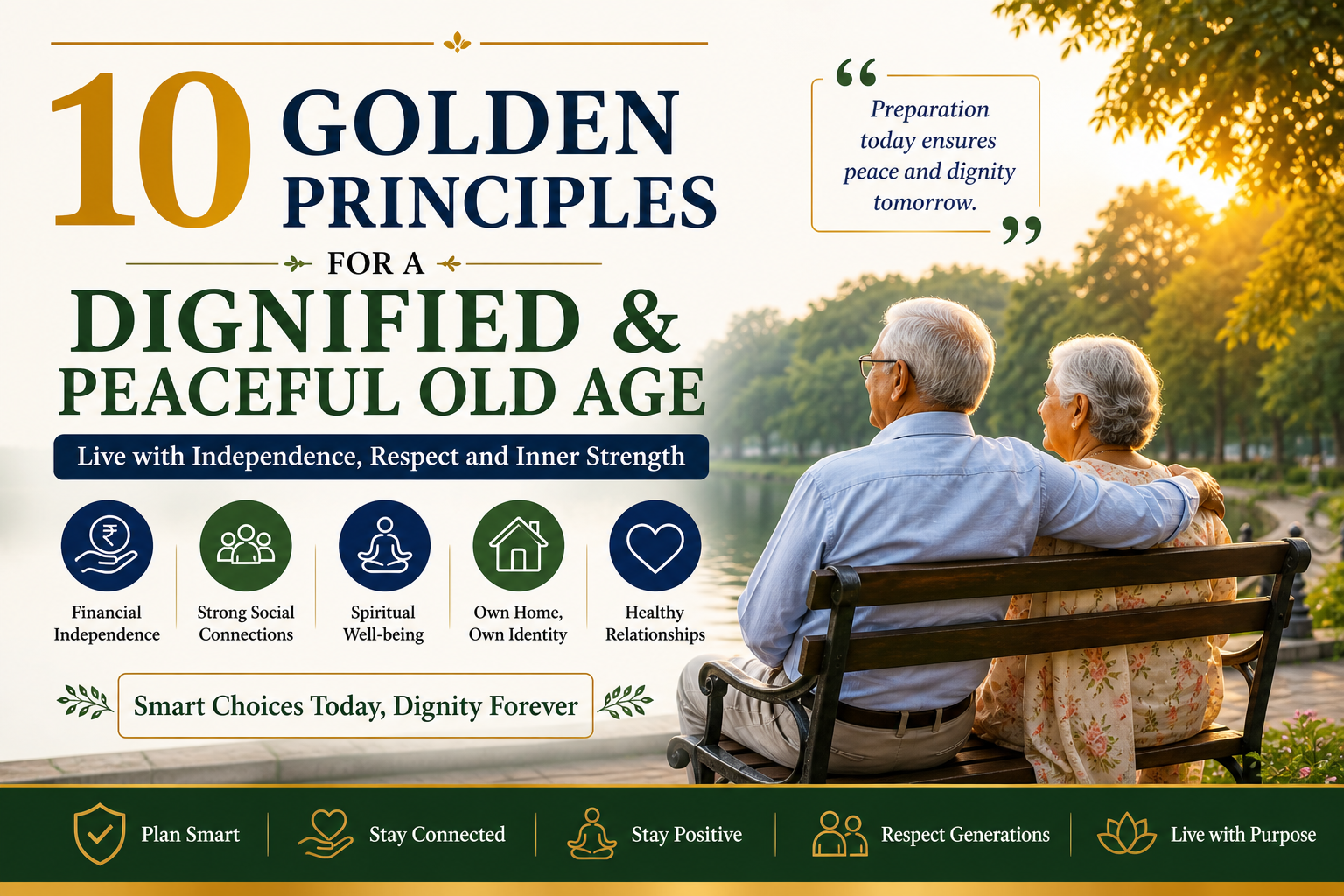
A Practical Framework for Living with Independence, Respect, and Inner Strength
1. Background and Context
Old age is an inevitable stage of life—one that brings maturity, wisdom, and perspective. However, it also introduces challenges that are often underestimated during the earlier phases of life. In today’s fast-changing social and economic environment, the traditional support systems for senior citizens are gradually weakening.
Modern lifestyles, nuclear families, professional pressures, and shifting values have widened the gap between generations. As a result, many elderly individuals find themselves facing emotional isolation, reduced decision-making authority, and financial dependence. Despite having families, they may feel neglected or disconnected.
From a professional standpoint—particularly in banking, legal practice, and insolvency matters—it is evident that many disputes and hardships faced by senior citizens arise not due to lack of resources, but due to lack of planning and awareness.
Old age, therefore, should not be left to chance. It must be approached with foresight, discipline, and clarity. The principles discussed in this article are derived from real-life experiences, family dynamics, and practical observations. They aim to provide a structured approach to living a life of dignity, independence, and peace in later years.
2. Objective of These Principles
The purpose of these ten principles is to empower individuals to take control of their future and ensure that their later years are not marked by dependency or regret, but by confidence and self-respect.
These principles help individuals:
- Maintain personal dignity and decision-making authority
- Avoid emotional and financial dependence on others
- Strengthen inner resilience and emotional stability
- Build balanced and respectful family relationships
- Live old age with purpose, peace, and clarity
A dignified old age is not a matter of luck—it is the result of conscious choices made consistently over time.
3. The 10 Golden Principles (Explained)
1. Maintain Financial Independence
Financial independence is the foundation of dignity in old age. A person who retains control over their finances is better positioned to make decisions and command respect.
Many individuals, out of affection or trust, transfer their assets, savings, or property to their children during their lifetime. While intentions may be good, such decisions often lead to vulnerability. Retaining control over financial resources ensures security and independence.
Key Insight: Financial independence safeguards both dignity and decision-making power.
2. Keep Social Relationships Alive
Loneliness is one of the most serious yet silent challenges in old age. Emotional well-being is closely linked to social engagement.
Maintaining relationships with friends, neighbours, and community members creates a support system beyond the family. Participation in social, cultural, or religious activities fosters a sense of belonging and purpose.
Key Insight: Social connections act as emotional security and enhance quality of life.
3. Understand the Power of Values (Sanskar)
Children learn not from advice, but from observation. The way individuals treat their own parents becomes a living example for their children.
Instilling values such as respect, empathy, and responsibility builds a strong moral foundation within the family. These values ultimately shape how future generations behave.
Key Insight: The values you practice today determine the respect you receive tomorrow.
4. Strengthen Your Spiritual Foundation
Spirituality provides inner strength that external circumstances cannot easily disturb. Whether through meditation, prayer, or reflection, it helps individuals develop acceptance and peace of mind.
A strong spiritual base reduces fear, anxiety, and emotional dependency. It also prepares the mind to accept life’s transitions with grace.
Key Insight: Inner stability reduces dependence on external support.
5. Do Not Abandon Your Permanent Home
A home is not just a physical structure—it represents identity, independence, and emotional comfort.
Many seniors shift to their children’s homes expecting care and companionship. However, such arrangements sometimes lead to feelings of being a burden or losing autonomy. Staying in one’s own home, as far as possible, helps maintain dignity and control over one’s life.
Key Insight: Your own home preserves your identity and independence.
6. Lower Expectations from Children
High expectations are a common source of disappointment in old age. Modern life has its own challenges, and younger generations may not always meet emotional or practical expectations.
By consciously reducing expectations and practicing contentment, individuals can avoid unnecessary stress and maintain peace of mind.
Key Insight: Contentment leads to emotional stability and happiness.
7. Respect the Generation Gap
Differences in thinking, lifestyle, and priorities between generations are natural. Attempting to impose one’s views often leads to conflict and misunderstanding.
Instead of interfering, it is wiser to offer guidance only when needed. Accepting change and respecting differences helps maintain harmony within the family.
Key Insight: Acceptance strengthens relationships; control weakens them.
8. Practice Self-Reliance Through Daily Activities
Remaining active and self-reliant is essential for both physical and mental well-being. Engaging in small daily tasks, light exercise, or hobbies keeps the body functional and the mind alert.
Unnecessary dependence reduces confidence and increases vulnerability. Self-reliance, even in small ways, builds dignity and self-respect.
Key Insight: Activity sustains independence and confidence.
9. Share Wisdom with Love, Not as a Lecture
Experience is valuable, but the way it is shared determines its impact. Advice given forcefully or repeatedly often leads to resistance.
Sharing knowledge with empathy, patience, and humility makes it more acceptable and meaningful. When wisdom is offered with love, it is more likely to be respected.
Key Insight: Communication style is as important as content.
10. Cherish Your Life Partner
In old age, a life partner becomes the closest companion. While children build their own lives, the spouse remains a constant source of emotional support.
Maintaining love, understanding, and mutual respect strengthens this bond and provides emotional security.
Key Insight: A strong marital relationship is the most dependable support system in later years.
4. Why These Principles Matter
From practical and professional experience, these principles hold deep relevance:
- Financial independence reduces risks of exploitation and dependency
- Retaining assets strengthens legal and personal security
- Emotional independence improves decision-making
- Social engagement prevents loneliness and mental stress
- Balanced family relationships reduce conflicts
These are not theoretical ideas—they reflect real-life situations seen in family disputes, financial matters, and elder care challenges.
5. Conclusion
Old age should not be seen as a period of decline or helplessness. With proper preparation and awareness, it can become a phase of peace, stability, and fulfillment.
The principles outlined above are simple yet powerful. When followed consciously, they enable individuals to maintain dignity, independence, and emotional balance throughout their later years.
A dignified old age is not shaped by circumstances alone—it is shaped by choices.
6. Message to Readers
Old age is not something to fear—it is something to prepare for.
Start today:
- Plan your finances wisely
- Build meaningful relationships
- Strengthen your emotional and spiritual foundation
- Stay active and self-reliant
Remember:
The quality of your future depends on the awareness of your present.
7. Disclaimer
This article is intended for general informational and educational purposes only.
- It does not constitute legal, financial, medical, or professional advice
- Readers are advised to exercise independent judgment before making decisions
- Professional consultation should be sought for specific situations
Ashok Kakkar
#HappyOldAge #SeniorLiving #DignifiedLife #LifeLessons #FinancialIndependence #HealthyAging #FamilyValues #SelfRespect