
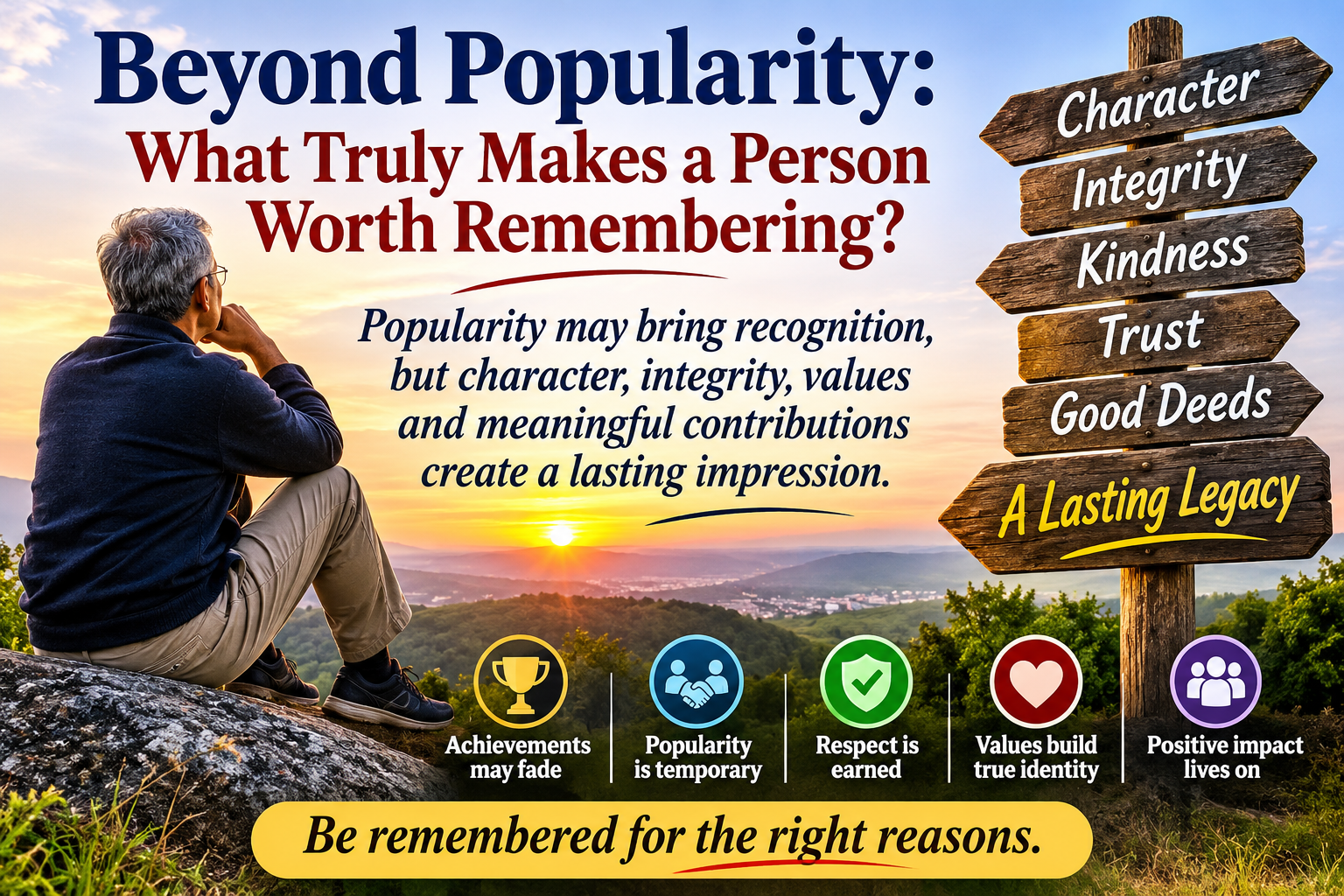
Beyond Popularity: What Truly Makes a Person Worth Remembering?
Popularity may bring recognition, but character, integrity, values and meaningful contributions create a lasting impression.
By Ashok Kakkar | Former Banker | Advocate | Insolvency Professional
Introduction: What Really Defines Our Identity?
Have you ever wondered what people would remember about you if you were no longer present among them? Would they recall your name, designation, professional achievements, wealth or public recognition? Or would they remember your behaviour, your honesty, your kindness and the contribution you made to their lives?
We live in a world where recognition, visibility, social media followers, professional positions and public image are often treated as indicators of a person’s importance. Being known by a large number of people is frequently associated with influence and achievement. However, being known and being respected are two entirely different things. A person may be recognised by thousands without commanding the trust of even a few, whereas someone who lives a quiet life away from publicity may earn genuine admiration through personal conduct, professional integrity and meaningful contributions.
This brings us to a fundamental question: is our real identity determined by how many people know us, or by the reasons for which they know and remember us?
Background: Popularity, Recognition and Respect Are Different Concepts
Popularity is generally associated with visibility, public attention and social recognition. It may arise from professional milestones, wealth, influence, media presence or association with prominent people. Respect develops through a quieter and steadier process. It is earned through consistent behaviour, honesty, fairness, responsibility, humility and consideration for others.
Recognition can be immediate, but respect requires time and consistency. A person may occupy an influential office and attract considerable attention, yet the position itself never guarantees personal esteem. Conversely, a person without a prestigious title or substantial wealth may command deep respect through integrity, knowledge, commitment and everyday conduct. It is therefore important to distinguish between being noticed, being appreciated, being trusted and being genuinely respected. These are not interchangeable expressions.
Important Dimensions of Our Real Identity
The following points explain why a person’s true identity should be evaluated beyond popularity and external achievements.
1. Being Known Is Not the Same as Being Valued
Being known simply means that people recognise your name, face or position. Being valued means that they appreciate your presence, judgement and contribution. A large social circle does not necessarily indicate meaningful relationships. What matters is whether people associate you with trust, reliability, goodwill and positive experiences.
2. Popularity May Be Temporary, but Character Creates a Lasting Impression
Public attention rises and declines with changing circumstances, trends and official roles. Character, on the other hand, is reflected in consistent conduct, particularly when there is no expectation of reward or recognition. People may eventually forget the publicity surrounding an individual, but they rarely forget how that individual treated them. A kind gesture, a fair decision or timely assistance may leave a deeper impression than a public achievement.
3. Designation and Position Do Not Define the Entire Personality
Official positions and institutional authority bring recognition and responsibility, but they remain roles that change with time. A person’s real worth is reflected in how they discharge their duties, guide colleagues and deal with people who have no influence over them. The true test of personality is often visible when a person no longer holds a position of authority.
4. Wealth and Material Success Cannot Guarantee Respect
Financial prosperity provides comfort, opportunity and social standing, but wealth alone cannot establish moral authority or personal credibility. Respect is more closely linked to the manner in which resources, opportunities and influence are used. A wealthy person may be admired for achievements, yet genuine respect takes root only when success is accompanied by fairness, humility and responsibility towards others.
5. Integrity Is the Foundation of Personal Identity
Integrity means maintaining consistency between what we say, what we believe and what we actually do. A person who follows ethical principles even in difficult circumstances gradually builds credibility. Others may disagree with our opinions or decisions, but honesty and consistency create lasting confidence. In the long run, integrity becomes the strongest foundation of reputation.
6. The Way We Treat Others Reveals Our True Personality
Everyday conduct is a more reliable measure of character than a carefully presented public image. How do we behave with junior colleagues, employees, service providers, strangers and people who can offer us no personal benefit? Do we listen patiently, respect differing opinions and acknowledge the efforts of others? These ordinary interactions reveal a great deal, and respect should never depend on the social or economic position of the person standing before us.
7. Professional Achievements Are Important, but Ethical Conduct Matters Equally
Knowledge, experience, hard work and career milestones deserve appreciation because they create value and opportunities for others. However, the manner in which success is achieved is equally important. A professional who combines competence with fairness, transparency and responsibility leaves a deeper legacy than one who measures success only by status or financial gain. Achievements establish credentials, while conduct establishes credibility.
8. Helping Others Without Expecting Recognition
Willingness to support others without seeking publicity or personal advantage is one of the highest expressions of character. Guiding a younger colleague, sharing knowledge or standing by someone during a difficult phase may appear to be modest gestures, yet they often leave a lasting mark on another person’s life. Some of the most meaningful work happens quietly.
9. Humility Makes Achievement More Meaningful
Success can sometimes create distance between people, particularly when it is accompanied by arrogance. Humility does not mean underestimating one’s abilities. It means recognising that everyone has something valuable to offer and that learning never ends. A humble person acknowledges mistakes, appreciates the efforts of others and accepts constructive criticism, and such qualities strengthen both personal and professional relationships.
10. Trust Is More Valuable Than Mere Recognition
People may recognise someone because of designation or visibility, but they rely on someone because they trust that person’s judgement and intentions. Trust is built slowly through consistency, accountability, confidentiality and the fulfilment of commitments. It is fragile once broken, and a person who earns it has achieved something far more substantial than popularity.
11. Social Media Visibility Should Not Become the Measure of Self-Worth
Digital platforms have made it easier than ever to reach large audiences. Likes, comments and followers may indicate public interest, but they cannot measure the depth of a person’s character or contribution. There is nothing wrong with sharing achievements or maintaining a public profile. The concern arises when external validation becomes the principal objective of life, because self-worth should not fluctuate with online attention.
12. The Importance of Relationships and Human Values
Relationships are strengthened through empathy, mutual respect and dependability. Family, friends and professional associates remember us not for our possessions but for the way we treated them. Being available in difficult times, honouring commitments and showing genuine concern create meaningful bonds, because human connections are sustained by values rather than appearances.
13. Our Legacy Is Created Through Our Actions
Legacy is not necessarily measured by wealth, property, awards or public recognition. It lives on in the knowledge we share, the people we guide, the institutions we strengthen and the values we uphold. A teacher may be remembered by students for generations, a professional for fairness and ethical advice, and a public servant for dedication and impartiality. Our actions often continue to influence others long after a particular assignment or position has ended.
14. What Would We Like People to Say About Us?
This is perhaps the most important question arising from the discussion. If people were asked to describe us in our absence, would we prefer to be remembered as wealthy, prominent or well connected, or as honest, fair, dependable and someone who made a positive difference? There is nothing wrong with aspiring to professional success, recognition or prosperity. These are legitimate objectives. It is worth ensuring, however, that the pursuit of success never compromises the values through which we earn genuine respect.
Practical Lessons: How Can We Build a Meaningful Identity?
A respected identity is not built overnight. It requires conscious effort and consistency, and the following principles apply irrespective of age, profession, financial position or social background.
Begin with honesty, maintaining transparency and ethical consistency in both personal and professional dealings. Respect everyone equally, and never judge a person by designation, wealth or social standing. Honour your commitments and accept full responsibility for your decisions. Remain a lifelong learner, open to new perspectives and constructive criticism, and share your experience generously by guiding others whenever the opportunity arises.
Stay grounded in humility by acknowledging the contribution of others, and avoid unnecessary comparisons by measuring progress through personal growth rather than competition for attention. Invest in relationships built on trust, empathy and mutual respect. Do not trade long-term principles for short-term convenience. Above all, try to leave people better than you found them, so that every interaction adds some value to their lives.
Conclusion: Be Remembered for the Right Reasons
The real measure of an individual cannot be confined to the number of people who recognise their name, the position they hold or the wealth they accumulate. These are meaningful parts of life, but they tell only part of the story. What matters equally, if not more, is the trust we inspire, the values we uphold and the positive influence we leave behind.
Popularity may draw people towards us, but character determines whether they genuinely value us. Professional success builds credentials, while integrity builds credibility. Wealth brings comfort, while fairness and generosity create goodwill. Position provides authority, while responsible conduct earns respect. We should certainly aspire to achieve, progress and be recognised for our work, but we should not allow the desire for recognition to become more important than the values that define us.
Perhaps the most meaningful achievement in life is not that everyone knows us, but that those who know us have genuine reasons to respect us.
“Do not spend your life merely trying to become someone people recognise. Strive to become someone people respect, trust and remember for the right reasons.”
A Message to Readers
Before measuring success solely through public recognition or professional milestones, take a quiet moment for self-reflection. Ask yourself whether you are respected for your conduct or merely recognised because of your position. Consider whether people trust you because of your everyday actions, whether you have made a meaningful difference in someone’s life, and whether you treat every individual with equal dignity irrespective of status.
The objective is not to seek popularity at the cost of personal values, nor to underestimate genuine achievement. It is to balance professional success, personal growth, social contribution and ethical conduct. Let us strive not merely to become well known, but to become worthy of being remembered.
Join the Discussion: Do you believe that being respected by a few is more valuable than being known by thousands? What, in your experience, truly defines a person’s lasting identity? Please share your thoughts in the comments below.
Disclaimer
This article presents general reflections on human behaviour, personal identity, professional ethics, social recognition and individual values. It is intended solely for educational, informational and awareness purposes. The views expressed are philosophical and personal observations and should not be interpreted as a judgement against any individual, profession, institution or group. Popularity, professional achievement, wealth and public recognition are not being criticised; the article highlights the importance of character, integrity, trust and meaningful contributions as additional dimensions of a person’s identity. Readers are encouraged to form their own opinions in the light of their own experience and circumstances.
Ashok Kakkar Former Banker | Advocate | Insolvency Professional
Focus keywords: Popularity vs Respect, True Identity of a Person, Character and Integrity, Personal Values, Professional Ethics, Legacy and Contribution, What Makes a Person Memorable